Sewage & Septic Backup Cleanup in Spring Hill, FL
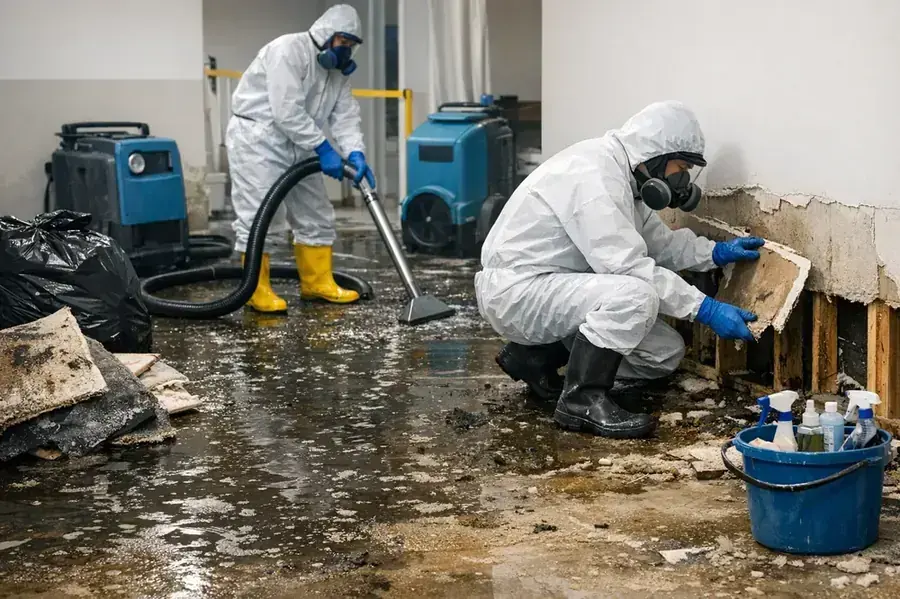
A backed-up toilet, tub or floor drain is Category 3 water the moment it happens. The sewage cleanup crew works in protective gear, removes what it touched, sanitizes and dries, so the house is safe to live in again.
(888) 621-2041Call for sewage backup cleanup in Spring HillIICRC S500 drying Truck-mounted extraction Daily moisture readings
First steps for sewage in Spring Hill
- 1Stop using water
Do not flush, shower or run the washer until the line is cleared.
- 2Keep people out
Close the door and keep kids and pets away.
- 3Shut HVAC if needed
Turn the system off if sewage reached a vent or return.
- 4Call for cleanup
Sewage needs protective gear and removal, not a mop.
How sewage is handled in Spring Hill, FL
- 1
Map the moisture
The tech who does the walkthrough maps moisture with pinless meters and thermal imaging before any equipment goes down, so the plan matches what is wet, not what looks wet.
- 2
Extract the water
The extraction crew pulls standing water with truck-mounted extraction, so the water leaves the building instead of moving to the next room.
- 3
Dry the structure
Air movers go in at each room's evaporation load, and LGR dehumidifiers pull that moisture back out of humid Florida air.
- 4
Verify and document
Crews record readings daily and pull equipment only when wet materials sit within 2 to 4 points of a dry reference, then the log goes into the claim file.
What does sewage and septic backup cleanup cost in Spring Hill, FL?
In Spring Hill, FL, sewage and septic backup cleanup typically runs $1,500 to $9,000 or more, depending on how much floor area the sewage covered, how much carpet, drywall and cabinetry must be removed and how long it sat.
One bathroom
$1,500 to $3,000
- Extraction and removal
- Antimicrobial treatment
- Drying
Several rooms
$3,000 to $6,000
- Carpet and pad removal
- Flood cuts
- HEPA air scrubbers
Large or long-sitting
$6,000 to $9,000+
- Containment
- Cabinet removal
- Full documentation
Ranges move with the water category, the square footage, the material class and how fast drying started. Run the water damage cost calculator for a planning number.
Many homes around Spring Hill still run on septic systems, while others connect to county sewer. Either way, a backup brings raw sewage into the house through the lowest drain, usually a shower, tub or toilet on the slab. Septic backups often follow heavy summer rain, when a saturated drain field cannot take more water, or a tank that has gone too long without pumping. Sewer backups come from roots, grease and old cast iron drain lines under the slab.
Why sewage is always Category 3
Sewage carries bacteria, viruses and parasites. It is Category 3 the moment it happens, not after it sits. That sets the rules for the cleanup:
- Crews wear respirators, gloves, boots and protective suits
- The work area is contained and HEPA air scrubbers run when needed
- Porous materials the sewage touched are removed, not dried: carpet, pad, drywall above the wet line, insulation
- Hard surfaces are cleaned and treated with an EPA-registered antimicrobial at its label dwell time
How the sewage cleanup crew works
The crew extracts the waste and water, bags and removes contaminated materials, and cleans every hard surface the water reached. Only after cleaning and antimicrobial treatment does drying start, with air movers and dehumidifiers running until readings hit the goal. A septic contractor pumps the tank or a plumber clears the line so the backup does not repeat during the dry-out.
Keep the family out
Keep children, pets and anyone with a weak immune system out of the affected area. Do not run the HVAC if the backup reached a return vent, and do not try to bleach and mop sewage-soaked carpet.
Sewage backup in Spring Hill? Call for cleanup now
Protecting a septic system
Have the tank inspected and pumped on schedule, keep grease and wipes out of drains, and keep roof runoff away from the drain field. The EPA septic system page explains care and warning signs, and the Florida Department of Health oversees onsite sewage systems in the state.
Water damage restoration across Spring Hill and Hernando County
The Spring Hill restoration crew covers every ZIP from Hernando Beach to Shady Hills, day or night.
The drying team works across Spring Hill, Weeki Wachee, Hernando Beach, Brooksville, Timber Pines, Shady Hills and Hudson, with rapid local response on the Suncoast Parkway and US 19 sides of town.
346063460734608346093461034611
See every neighborhood and ZIP coveredRelated water damage services in Spring Hill
Sewage and Septic Backup Cleanup questions in Spring Hill, FL
Is it safe to clean a sewage backup myself?
Not beyond a very small hard-surface spill. Sewage is Category 3 and carries pathogens. Contaminated carpet, pad and drywall must be removed with protective gear.
Why does septic back up after heavy rain?
A saturated drain field cannot absorb more water, so wastewater has nowhere to go and backs up through the lowest drain in the house.
Can carpet be cleaned after a sewage backup?
No. Carpet and pad touched by sewage are removed and discarded. Hard flooring like tile can be cleaned and disinfected.
What is an EPA-registered antimicrobial?
A product registered with the EPA for use on surfaces, applied after cleaning and left for its label dwell time. It is a product standard, not a certification of the people applying it.
Is sewage backup covered by insurance?
Many policies need a sewer or drain backup endorsement. Coverage depends on your policy, so it is worth checking with your own insurer.
How long does sewage cleanup take?
Removal and cleaning usually take one to two days, then drying runs three to five days depending on the materials.
Sewage and Septic Backup Cleanup in Spring Hill? Get the drying started today.
Every hour water sits, it moves deeper into drywall, baseboards and the slab. The restoration team extracts, dries to the IICRC S500 goal and logs every reading for the claim.