Structural Drying & Dehumidification in Spring Hill, FL
Surfaces can look dry while block, framing and slab still hold water. Structural drying pulls moisture out of the building itself, and the equipment stays until the readings say dry, not until it looks dry.
(888) 621-2041Start a verified Spring Hill dry-out nowIICRC S500 drying Truck-mounted extraction Daily moisture readings
First steps for structural drying in Spring Hill
- 1Keep the house closed
Close windows so humid outdoor air stays out.
- 2Leave equipment running
Do not turn off air movers or dehumidifiers at night.
- 3Keep the AC on
Set a steady temperature so the air keeps drying.
- 4Call with questions
Ask for the daily readings if you want to follow progress.
How structural drying is handled in Spring Hill, FL
- 1
Map the moisture
The tech who does the walkthrough maps moisture with pinless meters and thermal imaging before any equipment goes down, so the plan matches what is wet, not what looks wet.
- 2
Extract the water
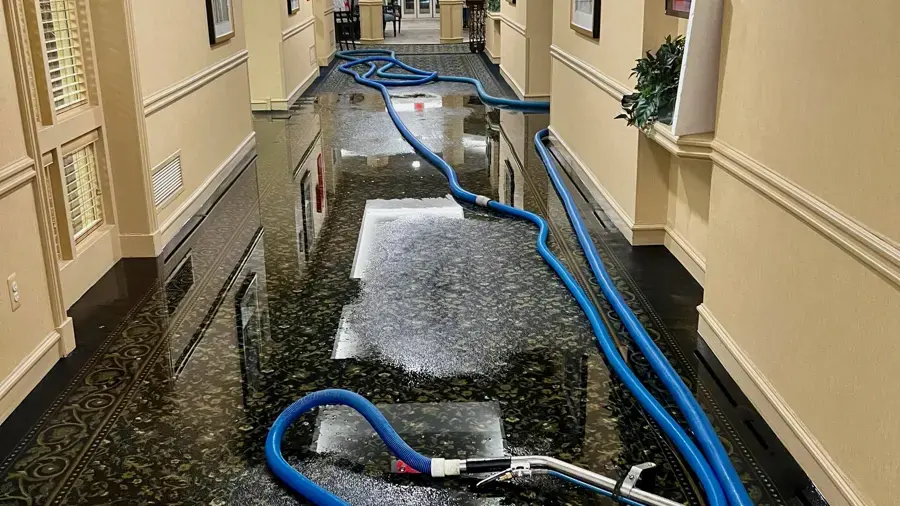
The extraction crew pulls standing water with truck-mounted extraction, so the water leaves the building instead of moving to the next room.
- 3
Dry the structure
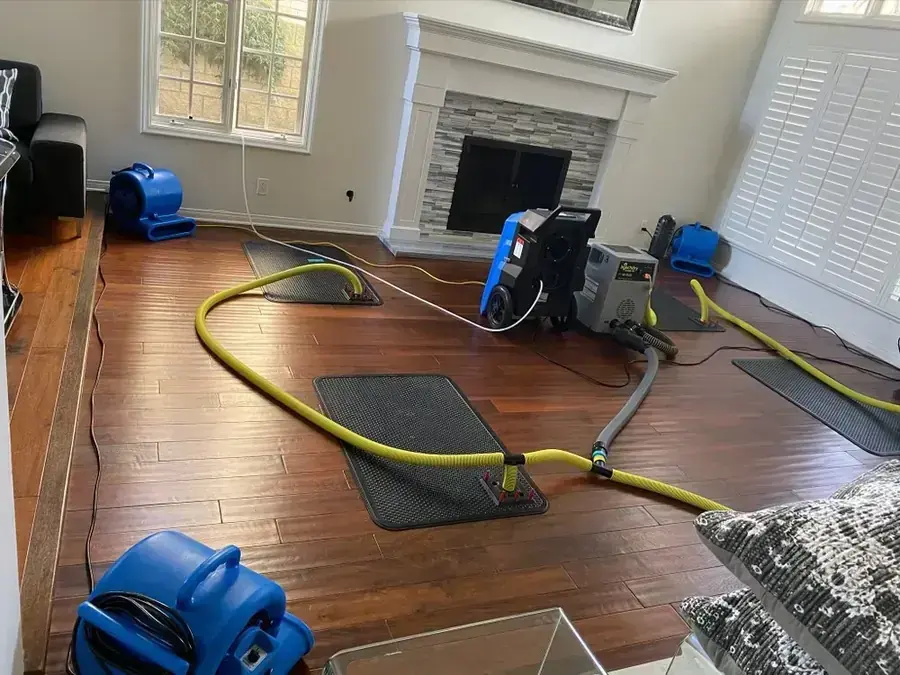
Air movers go in at each room's evaporation load, and LGR dehumidifiers pull that moisture back out of humid Florida air.
- 4
Verify and document
Crews record readings daily and pull equipment only when wet materials sit within 2 to 4 points of a dry reference, then the log goes into the claim file.
What does structural drying and dehumidification cost in Spring Hill, FL?
In Spring Hill, FL, structural drying typically runs $1,000 to $6,000, depending on the number of rooms, the class of water loss, the materials involved and how many days equipment has to run to reach the drying goal.
Single room
$1,000 to $2,000
- Moisture mapping
- Air movers
- One LGR dehumidifier
Multi-room
$2,000 to $4,000
- Cavity drying
- Several dehumidifiers
- Daily psychrometric logs
Class 4 materials
$4,000 to $6,000+
- Hardwood drying mats
- Desiccant dehumidification
- Extended monitoring
Ranges move with the water category, the square footage, the material class and how fast drying started. Run the water damage cost calculator for a planning number.
Structural drying is the part of water damage restoration that decides whether the problem is really over. IICRC S500 is the industry drying standard, and it treats drying as a measured process: moisture mapping first, equipment sized to the room, daily readings, and a clear goal. In Spring Hill that matters more than in drier places, because Gulf coast air is humid most of the year, which slows evaporation and makes dehumidification the core of the job.
How a structural dry-out is set up
- Moisture mapping with pinless and pin meters and thermal imaging before equipment goes down
- Classification: Class 1 through 4 sets how much equipment a room needs
- Air movers placed to the room's evaporation load, aimed along wet walls
- LGR (low grain refrigerant) dehumidifiers to pull water back out of the air
- Desiccant dehumidifiers for Class 4 materials such as hardwood, plaster and dense concrete
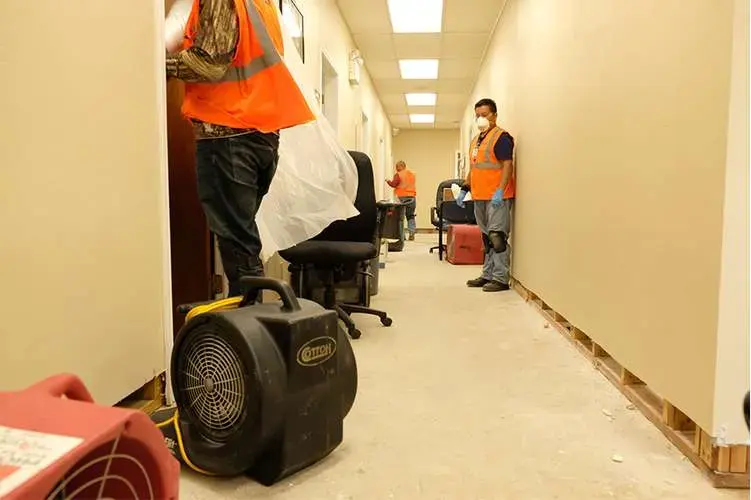
Hardwood floors get drying mats that pull water up through the boards. Wall cavities get small openings or low flood cuts so air reaches the inside face of the drywall and the block.
Readings, not a calendar
The drying team records temperature, relative humidity and moisture content every day, the psychrometric log adjusters look for. The drying goal is reached when wet materials read within 2 to 4 points of a dry reference material of the same type elsewhere in the building. A contained Class 1 loss usually dries in three to five days; hardwood, block and slab take longer. Equipment comes out on the readings, not on a schedule.
Why closing the windows helps
In humid Florida weather, open windows pull wet outdoor air into the drying area. Most dry-outs run with the house closed and the AC or dehumidifiers controlling the air.
Get the Spring Hill drying started today
Where structural drying fits
Drying follows water extraction on every clean or gray water loss, and follows removal and cleaning on Category 3 losses. The EPA indoor air quality page explains why moisture control matters indoors, and UF/IFAS Extension covers humidity control in Florida homes.
Water damage restoration across Spring Hill and Hernando County
The Spring Hill restoration crew covers every ZIP from Hernando Beach to Shady Hills, day or night.
The drying team works across Spring Hill, Weeki Wachee, Hernando Beach, Brooksville, Timber Pines, Shady Hills and Hudson, with rapid local response on the Suncoast Parkway and US 19 sides of town.
346063460734608346093461034611
See every neighborhood and ZIP coveredRelated water damage services in Spring Hill
Structural Drying and Dehumidification questions in Spring Hill, FL
What is structural drying?
Drying the building itself, walls, framing, block, slab and subfloor, not just the surfaces. It is measured with meters and finished when readings reach the drying goal.
What is the IICRC S500?
IICRC S500 is the industry drying standard for water damage restoration. It covers inspection, water categories, drying classes, equipment and documentation.
Why do the fans have to run day and night?
Evaporation and dehumidification only work while the equipment runs. Turning it off lets moisture settle back into materials and extends the job.
What are the drying classes?
Class 1 through 4 describe how much water and which materials are involved. Class 4 covers dense materials like hardwood, plaster and concrete that need specialty drying.
How is dry defined?
Wet materials must read within 2 to 4 points of a dry reference material of the same kind in an unaffected part of the building.
Why is drying slower in Spring Hill?
Humid Gulf coast air holds more moisture, so dehumidifiers do more of the work. Keeping the house closed and conditioned speeds it up.
Structural Drying and Dehumidification in Spring Hill? Get the drying started today.
Every hour water sits, it moves deeper into drywall, baseboards and the slab. The restoration team extracts, dries to the IICRC S500 goal and logs every reading for the claim.